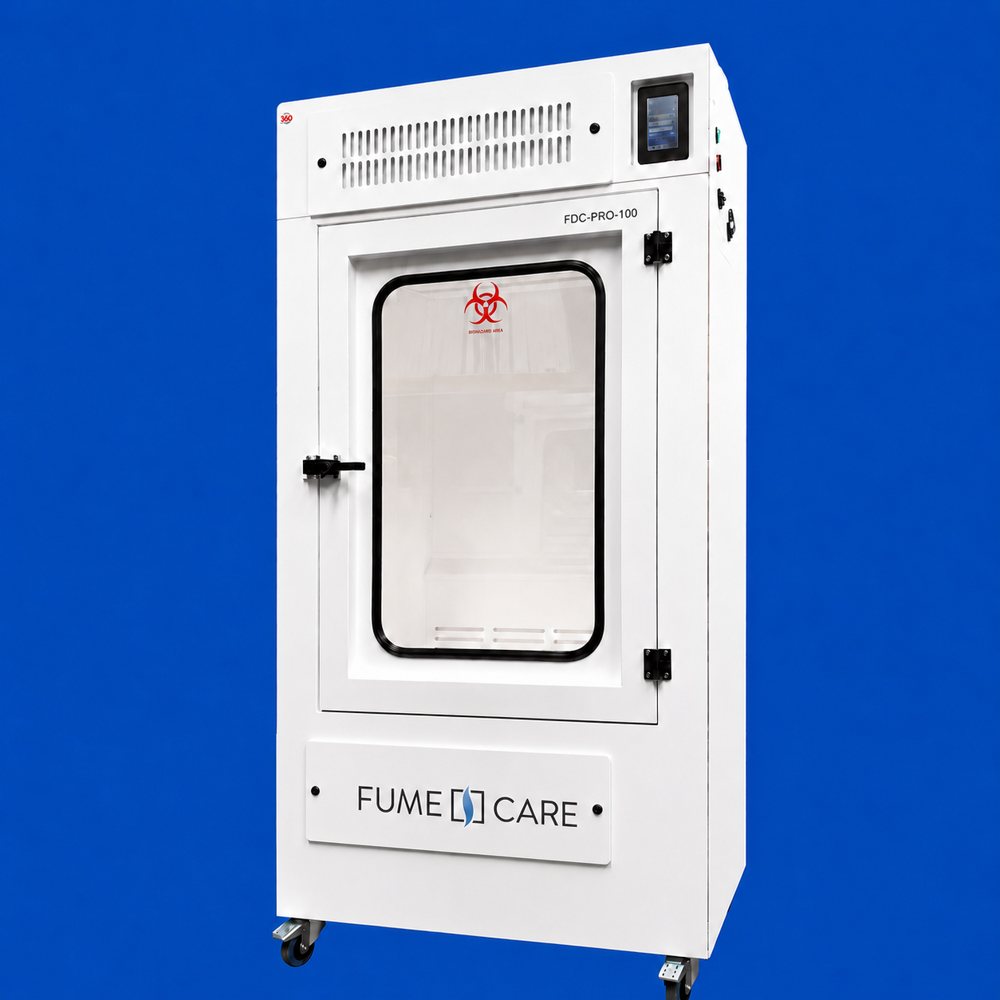
Filtered at the inlet
Air drawn in at the top of the cabinet passes first through an inlet prefilter and then a HEPA particulate filter, so the air reaching your exhibit is clean and sterile before it ever touches it.
Dry wet exhibits under sterile, HEPA-filtered air in a positive pressure chamber that knows when the evidence is dry, records every parameter against the case, and enforces a clean break before the next one.
Biological material does not wait. While an exhibit stays wet, bacteria and mould go to work on it, and a viable DNA profile can be lost in hours. Dry it in the open and you trade one problem for another, because modern profiling is sensitive enough to pick up transferred touch DNA, so anything that shares air with your exhibit becomes a question a defence lawyer can ask.
The FDC-PRO is built for both halves of that problem. Exhibits dry quickly under clean, filtered air in a sealed chamber, and the conditions they dried under are recorded against the case number and the officer who ran it.
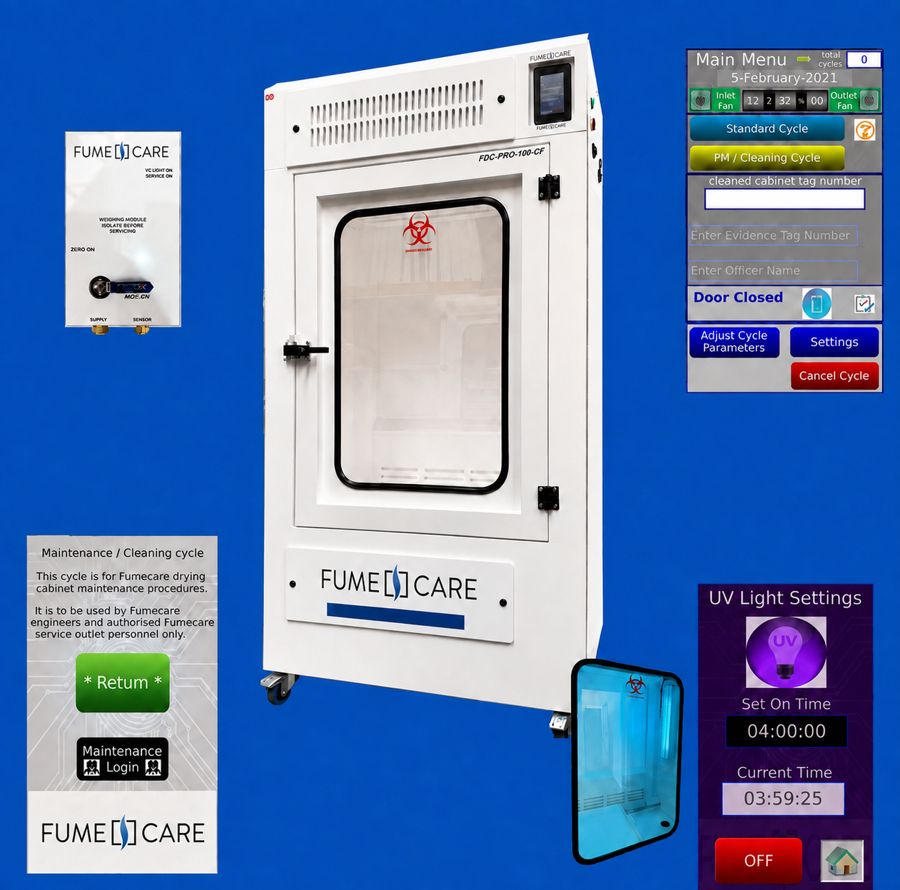
The full control, filtration and washdown system on every cabinet.
Most drying cabinets filter what leaves. The FDC-PRO filters what enters as well, then holds the chamber at a slight positive pressure so unfiltered room air cannot work its way in.
Air drawn in at the top of the cabinet passes first through an inlet prefilter and then a HEPA particulate filter, so the air reaching your exhibit is clean and sterile before it ever touches it.
That sterile air moves down through the chamber in a laminar pattern, drying the exhibit evenly while the slight positive pressure keeps unfiltered air from leaking in around the door.
Vapours, odours and particulates given off by the drying exhibit are captured by carbon and HEPA filters in the base, so nothing hazardous is released into the room. No ducting required.
A blower on a timer cannot know whether an exhibit is dry. It only knows how long it has been running. The FDC-PRO measures relative humidity inside the chamber and tells the operator on screen when drying is actually complete, so exhibits are not pulled early or left running for hours longer than they need.

The chain of custody is often the first thing challenged. The FDC-PRO is built so that what happened to an exhibit, and the state the cabinet was in at the time, can both be produced afterwards.
The evidence tag number and officer name are entered before a cycle can run, and are written into the drying record along with the date, time and every parameter.
The drying parameters are recorded and stored against the evidence tag and officer, ready for the case file if you need to show the conditions an exhibit was dried under.
Before the next case can be processed, the operator has to confirm the cabinet was cleaned and enter the new cleaning tag number. The breakpoint between cases is recorded, not assumed.
Humidity sensors are calibrated on screen against a traceable certified meter, and every calibration action is logged, so you can show the cabinet was in calibration when the exhibit was processed.
Unusually for a drying cabinet, service visits are recorded as well as cycles: service tag, RH calibration results, fan settings and any change made. Strong documentation at audit.
A single-point steel locking door keeps exhibits secure while they dry, so custody of the item is maintained through the drying step.
Contamination control is only as good as the clean between exhibits. The FDC-PRO ships with a complete plumbing and washdown package so the chamber can be properly washed down rather than dabbed at with a cloth.
The spray hose is kept outside the working compartment at all times, so the cleaning equipment itself never becomes the thing that carries material from one case to the next. Waste water leaves through a drain outlet and flexible hose.
The cabinet walks the operator through it rather than leaving it to memory.
Anywhere wet or biologically contaminated exhibits have to be dried before packaging, examination or storage.
Garments, bedding and fabrics recovered wet from scenes, hung full length inside the cabinet so they dry evenly without being folded or bagged damp.
Items carrying blood or other body fluids, dried under sterile air so the biological material is preserved for profiling rather than degraded by damp.
Tools, weapons and smaller exhibits on removable shelves, dried and contained in the same secure, filtered environment.
Front-line evidence handling where exhibits arrive at any hour and need to be secured, dried and documented without tying up a examination room.
Laboratories that have to demonstrate contamination control, calibration and traceability as part of their quality system and accreditation.
Specialist facilities handling contaminated items that need containment of odours and particulates as much as effective drying.
Choose the cabinet to suit the exhibits you handle and the room you have. All models share the same control, filtration and recording system.
| Model | Width | Typical use |
|---|---|---|
| FDC-PRO-75 | 0.75m | Compact units and smaller exhibit volumes |
| FDC-PRO-100 | 1.0m | General evidence handling, the popular size |
| FDC-PRO-150 | 1.5m | Higher throughput and bulkier exhibits |
| Custom | Bespoke | Built to your space and requirements |
Polypropylene construction with a corrosion-proof interior and painted steel door, full-length hanging space with removable shelves, lockable castors and a complete washdown package. Supplied with washdown module, tray, hanging rails, keys, manual and stylus. Site requirements are a 15mm cold water supply, 38mm waste at low level and a 13A switched socket. Full dimensions and datasheet available on request.
The cabinet uses HEPA and carbon filtration with a prefilter, keeping the drying air clean and capturing the vapours, odours and particulates coming off the exhibit so nothing hazardous reaches the room.
Operators are prompted through each step, and a question mark on any screen explains that function, which cuts the training burden considerably.
Factory-set fan balance holds the chamber slightly above room pressure, so unfiltered air is pushed out rather than drawn in.
If a blockage or filter problem threatens the airflow, the system alerts the operator immediately rather than drying on regardless.
Hang garments at full length or fit removable shelves for smaller items, so the chamber suits whatever the case brings in.
Reinforced plastics resist the liquids, fumes and disinfectants the chamber meets, which extends the working life of the cabinet.
Internal sockets are built in for UV lamps, giving a further decontamination step after cleaning, controlled and timed from the screen.
Recirculating design means no ducting to install, and lockable castors let the cabinet be positioned and repositioned as the unit changes.
Designed and manufactured in our ISO 9001:2015 accredited facility in Liverpool, with the documentation and traceability that brings.

Send us the model you need and a little about your exhibits and facility, and we'll come back with a specification and price, typically within four working hours.